[Back to Lecture Notes page]
Internetworking
Sub-topic Outline:
- Different types of Internetworking
- Concatenating Virtual Circuits
- Datagram Internetworking
- Tunneling
- Internetwork Routing
- Firewalls
Internetworking
- Many different networks with different protocols exist and will probably continue to exist.
- To connect different networks, we need a "box" existing between the networks to convert the data.
- What the "boxes" are called depends on what level they deal with the data.
Repeaters: Physical Layer
Bridges: Data Link Layer
Routers: Network Layer
Gateways: Transport and Application Layers
Different Approaches Internetworking
- Concatenating Virtual Circuits
- Datagram internetworking
- Tunneling
Concatenating Virtual Circuits
- Construct VCs through all the intermediate networks
- Appropriate only when the different networks have similar properties (eg. reliable service, connection-based etc)
- The steps taken to construct the VC joining one gateway to another is as normal - but now also construct a VC joining all the gateways.
Datagram Internetworking
- Again, extended from the idea of datagrams on one network - but the packets have to be converted by the gateways.
- Problems:
- The formats of the packets must be similar enough to convert.
- Addressing - the intermediate network may not support the address format of the final destination.
Comparing VC with Datagram Internetworking
- VCs:
- Can reserve buffers at gateways
- Guaranteed sequencing and flow
- Short packet headers
- Require table space at gateways
- Hard to adapt to congestions
- Vulnerable to gateway failure
- Can't implement if one intermediate network is datagram-based.
- Datagrams:
- Potential to adapt to congestion
- Respond to gateway failures
- Can be implemented over VC or datagram-based networks.
- Larger packets.
- More traffic
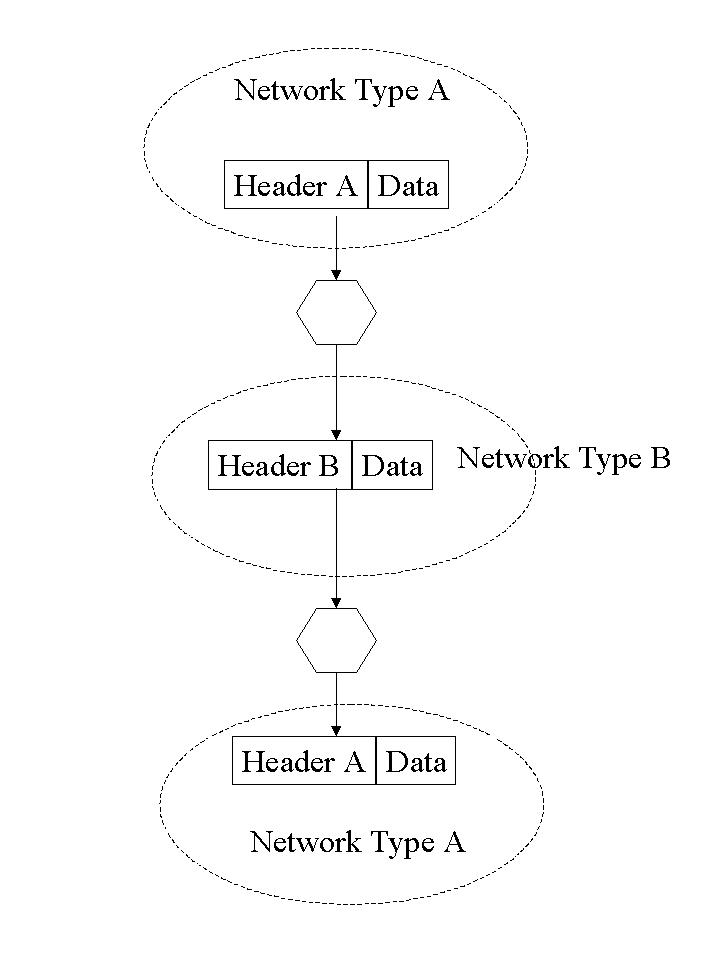
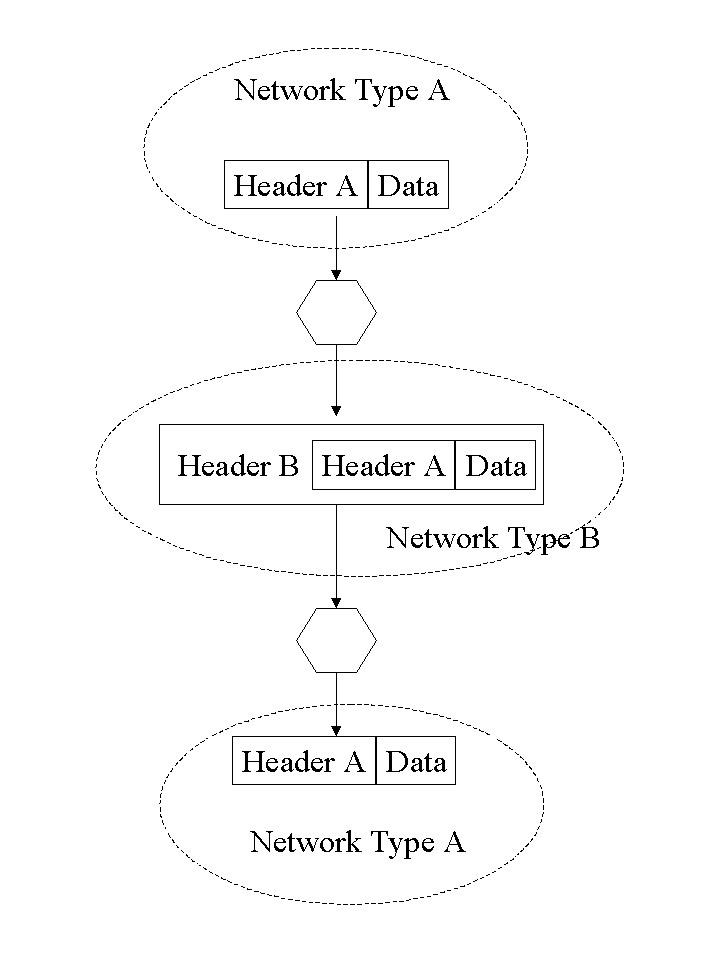
Tunneling
- Applicable to both VC and Datagram internetworking.
- Avoids the problems of incompatible header formats between networks.
Without Tunneling:
With Tunneling:
Internetwork Routing
- Can use the routing algorithms we have already studied, by coming with a topology for the gateway connections.
- We ignore the routing with each individual network, and assume they are done independently
- Some extra considerations:
- Internetworking usually cross international boundaries, and different laws (eg. on privacy) have to be considered
- Price for charges different
Firewalls
- One major consideration for gateways is security:
- What packets to let into a network? Potential viruses, worms, etc.
- What packets to let out of a network? Potential unauthorized access.
- A firewall is a gateway which filters all incoming and outgoing traffic to/from a network.
- Packet filters
operates on the network layer - eg. checks addresses to see if where the packets are coming from.
- Application Gateways
operates on the transport and application layer - eg. checks email messages for their size.
[Back to Lecture Notes page]